China has started ranking citizens with a creepy ‘social credit’ system – here’s what you can do wrong, and the embarrassing, demeaning ways they can punish you.
• China plans to rank all its citizens based on their “social credit” by 2020.
• People can be rewarded or punished according to their scores.
• Like private financial credit scores, a person’s social scores can move up and down according to their behavior.
• At the moment the system is piecemeal — some are run by city councils, while others are scored by private tech platforms that hold personal data.
• Scroll down to see how you can be punished or rewarded.
The Chinese state is setting up a vast ranking system that will monitor the behavior of its enormous population, and rank them all based on their “social credit.”
The “social credit system,” first announced in 2014, aims to reinforce the idea that “keeping trust is glorious and breaking trust is disgraceful,” according to a government document.
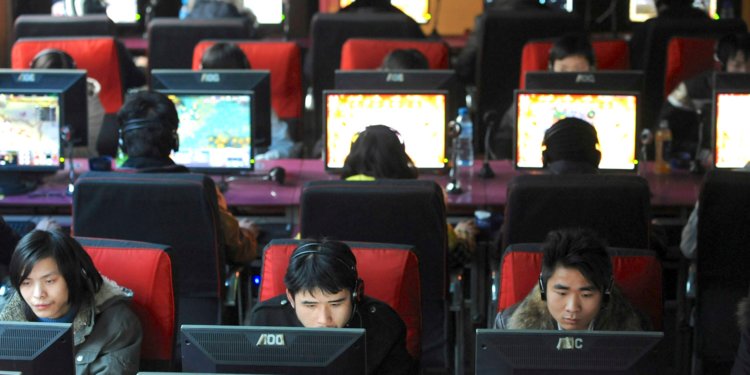
An internet cafe in Wuhan, China.
The program is due to be fully operational nationwide by 2020, but is being piloted for millions of people across the country already. The scheme will be mandatory.
At the moment the system is piecemeal — some are run by city councils, others are scored by private tech platforms which hold personal data.
Like private credit scores, a person’s social score can move up and down depending on their behavior. The exact methodology is a secret — but examples of infractions include bad driving, smoking in non-smoking zones, buying too many video games and posting fake news online.
1. Banning You From Flying Or Getting The Train.
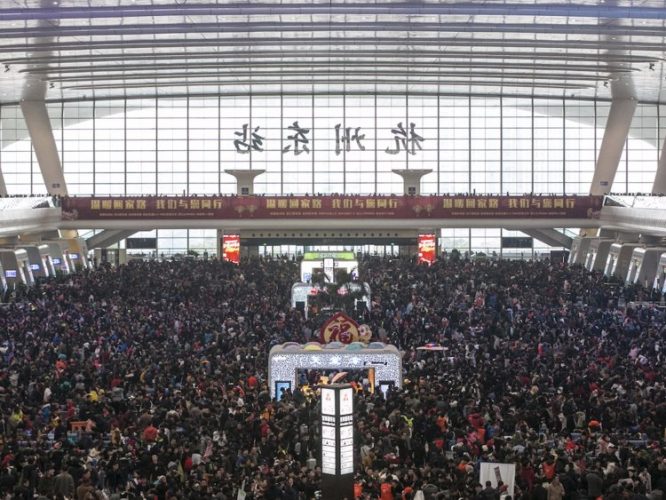
A railway station waiting hall in Hangzhou in February 2016.
China has already started punishing people by restricting their travel.
Nine million people with low scores have been blocked from buying tickets for domestic flights, Channel News Asia reported in March, citing official statistics.
They can also clamp down on luxury options — three million people are barred from getting business-class train tickets.
The eventual system will punish bad passengers specifically. Potential misdeeds include trying to ride with no ticket, loitering in front of boarding gates, or smoking in no-smoking areas.
2. Throttling Your Internet Speeds.
This is according to Rachel Botsman, an author who published part of her book on tech security on Wired last year. The exact mechanics aren’t clear yet.
According to Foreign Policy, credit systems monitor whether people pay bills on time, much like financial credit trackers — but also ascribe a moral dimension.
Other mooted punishable offences include spending too long playing video games, wasting money on frivolous purchases and posting on social media.
Spreading fake news, specifically about terrorist attacks or airport security, will also be punishable offences.
3. Banning You — Or Your Kids — From The Best Schools.
Students sing the national anthem in the playground during the flag-hoisting ceremony at their school in Shanghai., September 27, 2017.
17 people who refused to carry out military service last year were barred from enrolling in higher education, applying for high school, or continuing their studies, Beijing News reported.
In July, a Chinese university denied an incoming student his spot because the student’s father had a bad social credit score.
4. Stopping You Getting The Best Jobs.
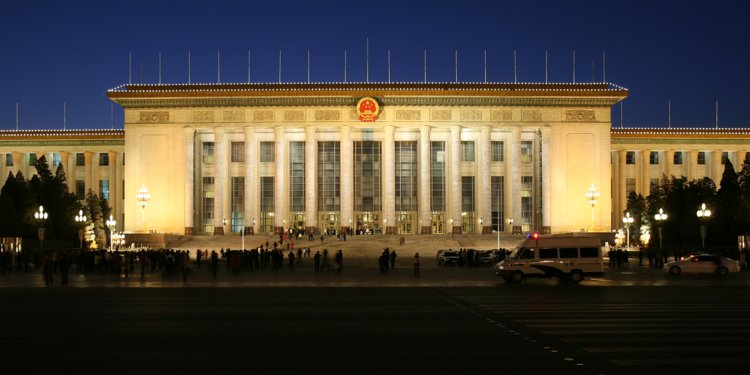
Great Hall of the People in Beijing, one of China’s largest state buildings.
“Trust-breaking” individuals would also be banned from doing management jobs in state-owned firms and big banks.
Some crimes, like fraud and embezzlement, would also have a big effect on social credit, Botsman reported.
5. Keeping You Out Of The Best Hotels.
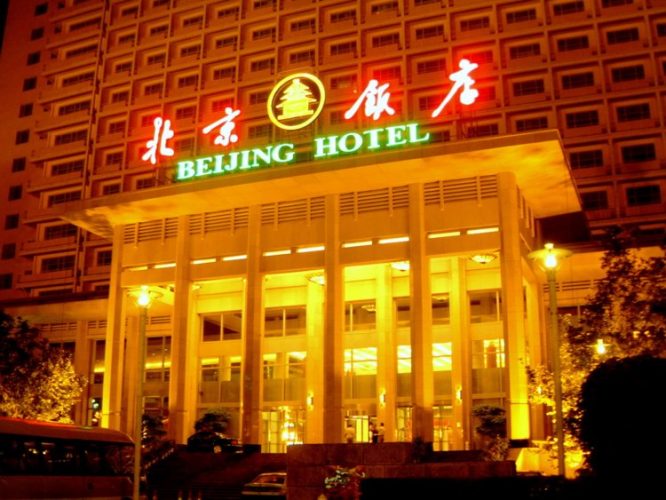
One of many Beijing hotels.
People who refused military service were also banned from some holidays and hotels — showing that vacation plans are fair game too.
The regime rewards people here as well as punishes them.
People with good scores can speed up travel applications to places like Europe, Botsman said.
An unidentified woman in Beijing also told the BBC in 2015 that she was able to book a hotel without having to pay a cash deposit because she had a good score.
6. Getting Your Dog Taken Away.
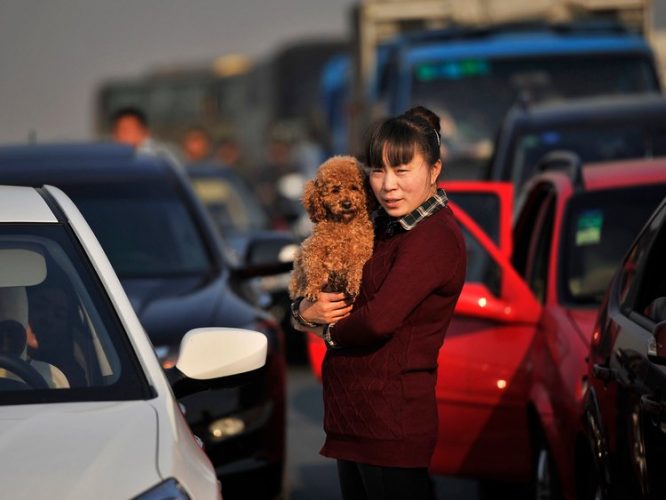
Woman holds her pet dog in the middle of a traffic jam in Anhui province in January 2014.
The eastern Chinese city of Jinan started enforcing a social credit system for dog owners in 2017, whereby pet owners get points deducted if the dog is walked without a leash or causes public disturbances.
Those who lost all their points had their dogs confiscated and had to take a test on regulations required for pet ownership.
7. Being Publicly Named As A Bad Citizen.
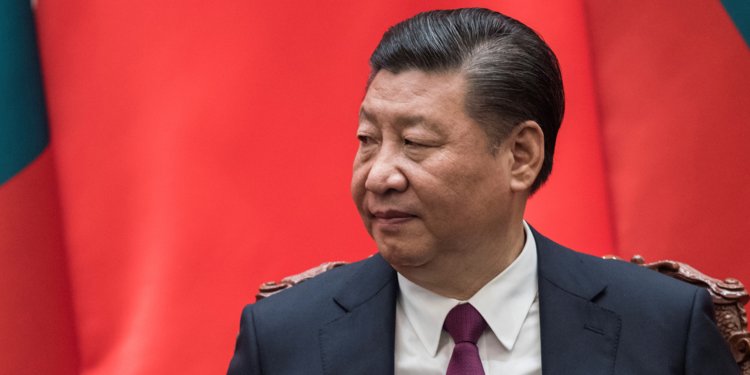
President Xi Jinping looking disdainful in December 2017.
Naming and shaming is another tactic available. A a 2016 government notice encourages companies to consult the blacklist before hiring people or giving them contracts.
However, people will be notified by the courts before they are added to the list, and are allowed to appeal against the decision within ten days of receiving the notification.
It’s not clear when the list will start to be implemented.
A prototype blacklist already exists, and has been used to punish people.
A list shows individual’s names alongside partially redacted ID numbers, while the one on the right shows company names.
Li Xiaolin, a lawyer who was placed on the list in 2015, found himself unable to purchase plane tickets home while on a work trip, Human Rights Watch reported. He also couldn’t apply for credit cards.
There is also a list for good citizens — that will reportedly get you more matches on dating websites.
Baihe’s landing page. China’s biggest dating site, is boosting the profiles of good citizens.
They can also get discounts on energy bills, rent things without deposits, and get better interest rates at banks.
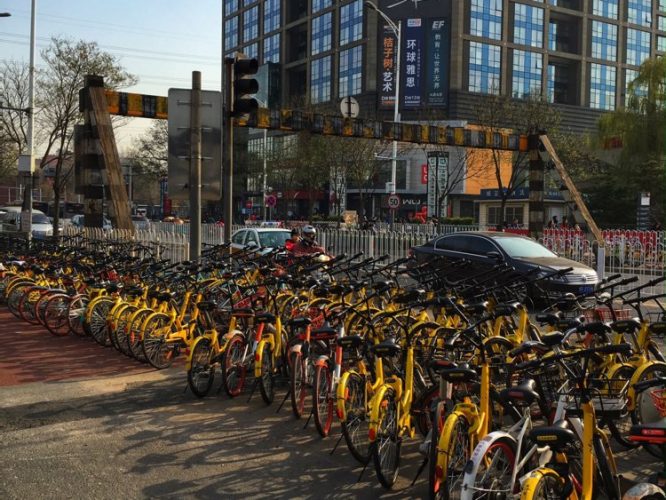
A bike-share station in China.
These perks were available to people in Rongcheng, eastern China, whose city council rolled out a social credit system for its citizens and was profiled by Foreign Policy.
Despite the creepiness of the system — Human Rights Watch called it “chilling,” while Botsman called it “a futuristic vision of Big Brother out of control” — some citizens say it’s making them better people already.
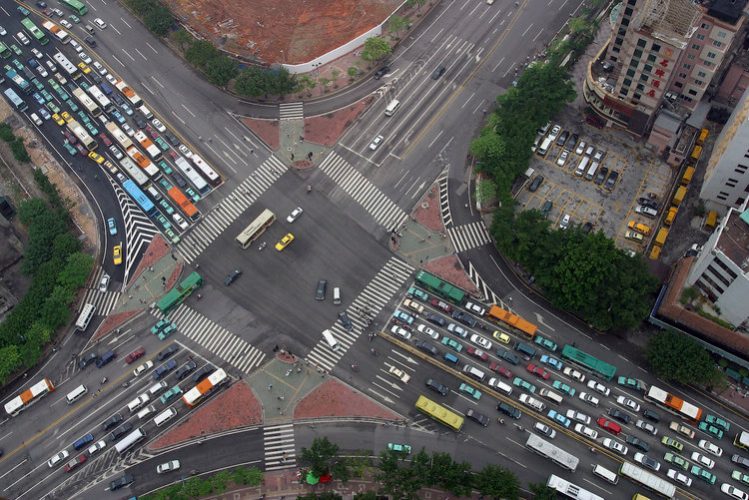
Crossroad in Guangdong, China.
A 32-year-old entrepreneur, who only gave his name as Chen, told Foreign Policy: “I feel like in the past six months, people’s behaviour has gotten better and better.
“For example, when we drive, now we always stop in front of crosswalks. If you don’t stop, you will lose your points.
“At first, we just worried about losing points, but now we got used to it.”
The Aadhaar program offers a glimpse of the tech world’s latest quest to control our lives, where dystopias are created in the name of helping the impoverished.
Big U.S. technology companies are involved in the construction of one of the most intrusive citizen surveillance programs in history.
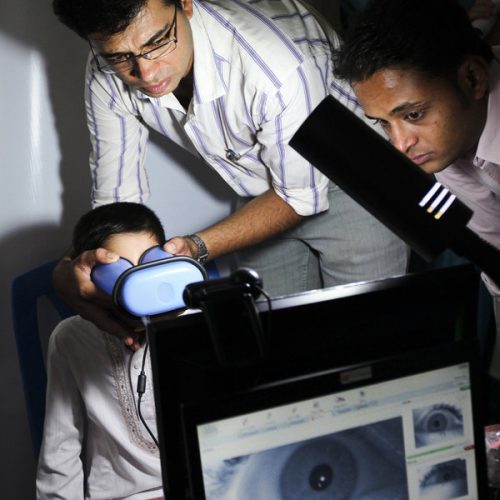
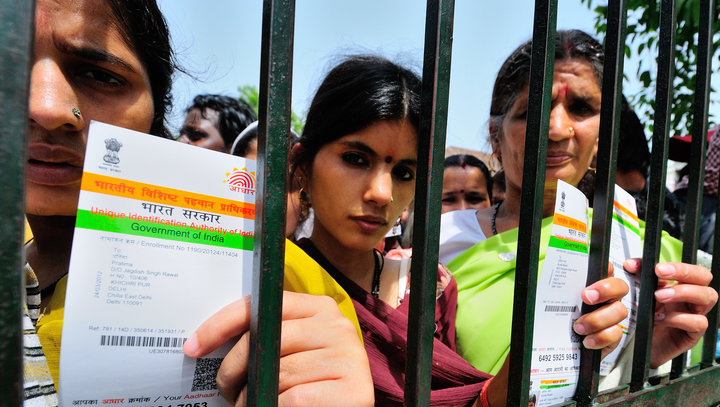
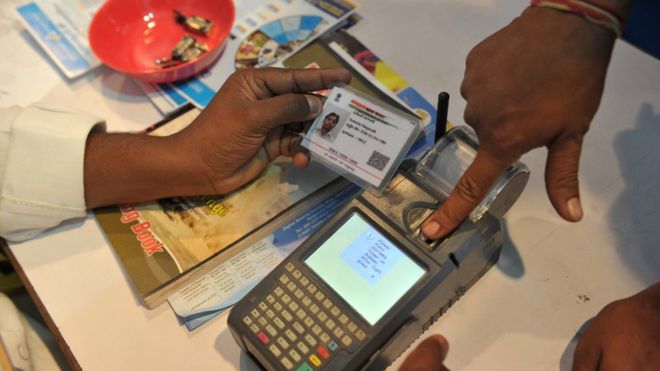
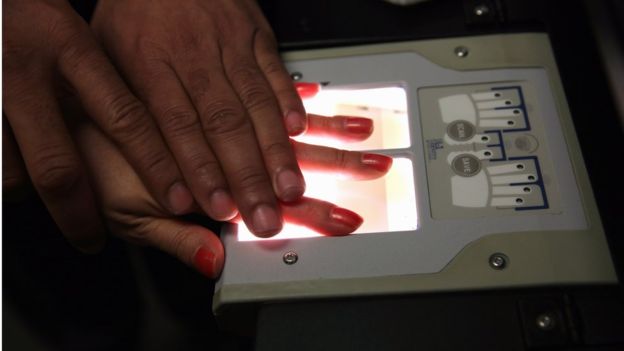
For the past nine years, India has been building the world’s biggest biometric database by collecting the fingerprints, iris scans and photos of nearly 1.3 billion people. For U.S. tech companies like Microsoft, Amazon and Facebook, the project, called Aadhaar (which means “proof” or “basis” in Hindi), could be a gold mine.
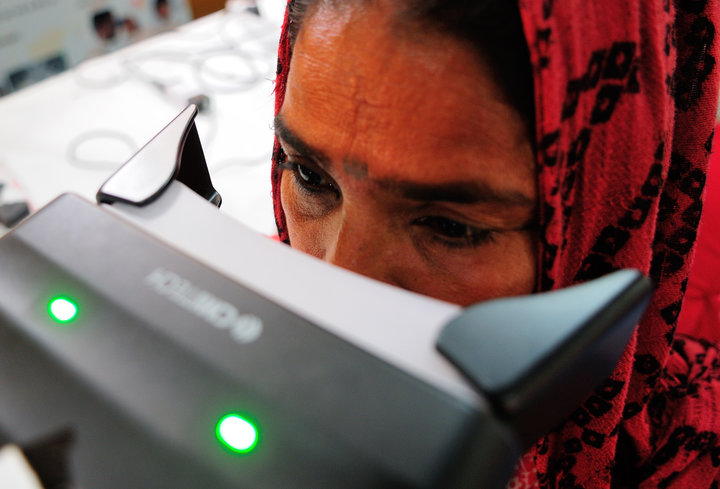
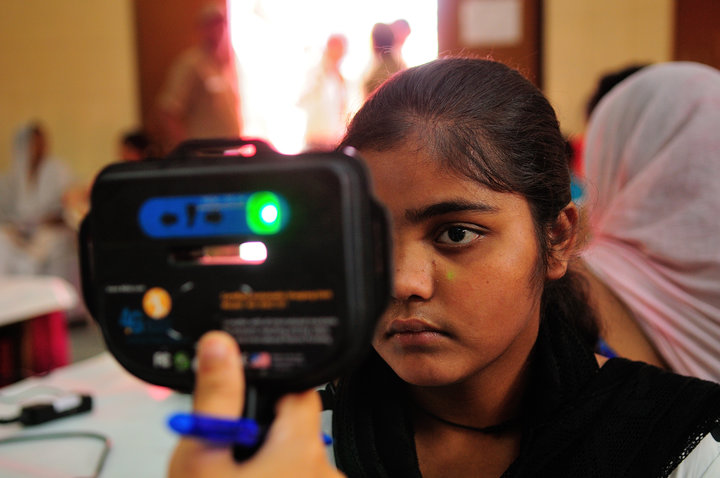
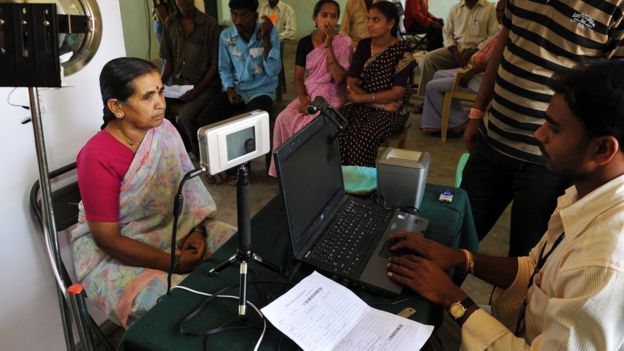
A woman is screened for an Aadhaar card on April 12, 2013, in New Delhi, India
The CEO of Microsoft has repeatedly praised the project, and local media have carried frequent reports on consultations between the Indian government and senior executives from companies like Apple and Google (in addition to South Korean-based Samsung) on how to make tech products Aadhaar-enabled.
But when reporters of HuffPost and HuffPost India asked these companies in the past weeks to confirm they were integrating Aadhaar into their products, only one company ― Google ― gave a definitive response.
That’s because Aadhaar has become deeply controversial, and the subject of a major Supreme Court of India case that will decide the future of the program as early as this month.
Launched nine years ago as a simple and revolutionary way to streamline access to welfare programs for India’s poor, the database has become Indians’ gateway to nearly any type of service ― from food stamps to a passport or a cell phone connection.
Practical errors in the system have caused millions of poor Indians to lose out on aid. And the exponential growth of the project has sparked concerns among security researchers and academics that India is the first step toward setting up a surveillance society to rival China.
A Scheme Born In The U.S.
Tapping into Aadhaar would help big tech companies access the data and transactions of millions of users in the second most populous country on earth, explained Usha Ramanathan, a Delhi-based lawyer, legal researcher and one of Aadhaar’s most vocal critics.
The idea for India’s national biometric identification team wasn’t unprecedented, and in fact, it has strong parallels with a system proposed for the United States.
Following the Sept. 11, 2001, attacks, the CEO of Oracle, Larry Ellison, offered to build the U.S. government software for a national identification system that would include a centralized computer database of all U.S. citizens.
The program never got off the ground amid objections from privacy and civil liberties advocates, but India’s own Ellison figure, Nandan Nilekani, had a similar idea. The billionaire founder of IT consulting giant Infosys, Nilekani conceptualized Aadhaar as a way to eliminate waste and corruption in India’s social welfare programs.
He lobbied the government to bring in Aadhaar, and went on to run the project under the administration of Manmohan Singh. Nilekani gained even more influence under current Prime Minister Narendra Modi, who moved to make Aadhaar necessary for almost any kind of business in India.
The first 12-digit Aadhaar ID was issued in 2010. Today, over a billion people (around 89 percent of India’s population) have been included in the system ― from India’s unimaginably wealthy billionaires to the homeless, from residents of the country’s sprawling cities to remote inaccessible villages.
While initially a voluntary program, the database is now linked to just about all government programs. You need an Aadhaar ID to get a passport issued or renewed.
Aadhaar was made mandatory for operating a bank account, using a cell phone or investing in mutual funds, only for the proposals to be rolled back pending the Supreme Court verdict on the constitutionality of the project.
As Aadhaar identification became integrated into other systems like banking, cell phones and government programs, tech companies can use the program to cross-reference their datasets against other databases and assemble a far more detailed and intrusive picture of Indians’ lives.
That would allow them, for example, to better target products or advertising to the vast Indian population. “You can take a unique identifying number and use it to find data in different sectors,” explained Pam Dixon, executive director of the World Privacy Forum, an American public interest research group. “That number can be cross-walked across all the different parts of their life.”
A line for Aadhaar cards in New Delhi.
Microsoft, which uses Aadhaar in a new version of Skype to verify users, declined to talk about its work integrating products with the Aadhaar database. But Bill Gates, Microsoft’s founder, has publicly endorsed Aadhaar and his foundation is funding a World Bank program to bring Aadhaar-like ID programs to other countries.
Gates has also argued that ID verification schemes like Aadhaar in itself don’t pose privacy issues. Microsoft CEO Satya Nadella has repeatedly praised Aadhaar in both his recent book and a tour across India.
Amazon did not respond to a request for comment, but according to a BuzzFeed report, the company told Indian customers not uploading a copy of Aadhaar “might result in a delay in the resolution or no resolution” of cases where packages were missing.
Facebook, too, failed to respond to repeated requests for comment, though the platform’s prompts for users to log in with the same name as their Aadhaar card prompted suspicions from users that it wanted everyone to use their Aadhaar-verified names and spellings so they could later build in Aadhaar functionality with minimal problems.
A spokesman for Google, which has its own payments platform in India called Tez, told HuffPost that the company has not integrated any of its products with Aadhaar. But there was outrage earlier in August when the Aadhaar helpline was added to Android phones without informing users. Google claimed in a statement to the Economic Times this happened “inadvertently”
Privacy Jeopardized For Millions
A woman gets screened for an Aadhaar card.
But the same features that are set to make tech companies millions are are also the ones that threaten the privacy and security of millions of Indians.
“As long as [the data] is being shared with so many people and services and companies, without knowing who has what data, it will always be an issue,” said Srinivas Kodali, an independent security researcher. “They can’t protect it until they encrypt it and stop sharing data.”
One government website allowed users to search and geolocate homes on the basis of caste and religion ― sparking fears of ethnic and religious violence in a country where lynchings, beatings and mob violence are commonplace.
Another website broadcast the names, phone numbers and medical purchases — like generic Viagra and HIV medication — of anyone who buys medicines from government stores. In another leak, a Google search for phone numbers of farmers in Andhra Pradesh would reveal their Aadhaar numbers, address, fathers’ names and bank account numbers.
The leaks are aggravated by “a Star Trek-type obsession” with data dashboards, said Sunil Abraham, executive director of the Center for Internet and Society.
Many government departments each created an online data dashboard with detailed personal records on individuals, he explained. The massive centralization of personal data, he said, created a huge security risk as these dashboards were accessible to any government official and in many cases, were even left open to the public.
Authentication failures have led to deaths among the poorest sections of Indian society when people were denied government food rations.
And much like the tech companies, some local governments are using the system to connect data sets and build expansive surveillance. In the state of Andhra Pradesh in India, there’s a war room next to the state chief minister’s office, where a wall of screens shows details from databases that collect information from every department.
There are security cameras and dashboards that track every mention of the chief minister on the news. There’s a separate team watching what’s being said about him on social media and there are also dashboards that collect information from IoT [Internet of Things] sensors across the state.
Court Ruling Could Halt Rollout
Those issues around privacy are why the dreams of government bureaucrats and large tech companies to build a perfect surveillance apparatus around Aadhaar may ultimately fall apart. The Supreme Court of India is set to decide on a case that could decide the future of the program.
The court is set to review 27 petitions, including whether requiring an Aadhaar for government subsidies and benefits makes access to these programs conditional, even though the state is constitutionally bound to deliver them.
The petitioners include lawyers, academics and a 92-year-old retired judge whose petition also secured the right to privacy as a fundamental right in August 2017.Petitioners also argue that the ability for Aadhaar to be used to track and profile people is unconstitutional.
In its judgment, due any day now, the court will rule on all 27 petitions together. It will decide not only the fate of the Aadhaar Act of 2016, but likely the future involvement of some of tech’s biggest companies in one of the world’s most ambitious and divisive IT projects.