____________________________________________________________________________________________________________
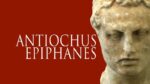
Antiochus IV Epiphanes
An antichrist
The “Little Horn” from the 3rd Beast. Daniel Chapter 8 & 11
Antiochus IV Epiphanes Persecuted the Jews and placed the Abomination of Desolation on the Temple Mount in 167 BC
____________________________________________________________________________________________________________
June 167 to December 164 BC = 3 1/2 years
____________________________________________________________________________________________________________
Daniel
Chapter 8
Daniel 8:1-27
Daniel’s Vision of the Ram and the Goat.
1. In the third year of the reign of king Belshazzar a vision appeared unto me, even unto me Daniel, after that which appeared unto me at the first.
2. And I saw in a vision; and it came to pass, when I saw, that I was at Shushan in the palace, which is in the province of Elam; and I saw in a vision, and I was by the river of Ulai.
3. Then I lifted up mine eyes, and saw, and, behold, there stood before the river a ram which had two horns: (Media & Persia – 2nd Beast) and the two horns were high; but one was higher than the other, and the higher came up last.
4. I saw the ram pushing westward, and northward, and southward; so that no beasts might stand before him, neither was there any that could deliver out of his hand; but he did according to his will, and became great.
5. And as I was considering, behold, an he goat (Greece – 3rd Beast) came from the west on the face of the whole earth, and touched not the ground: and the goat had a notable horn (Alexander the Great) between his eyes.
6. And he came to the ram that had two horns, which I had seen standing before the river, and ran unto him in the fury of his power.
7. And I saw him come close unto the ram, and he was moved with choler against him, and smote the ram, and brake his two horns: and there was no power in the ram to stand before him, but he cast him down to the ground, and stamped upon him: and there was none that could deliver the ram out of his hand.
8. Therefore the he goat (Greece) waxed very great: and when he was strong, the great horn was broken; (Alexander the Great died) and for it came up four notable ones (Cassander / Ptolemy / Antigonus / Seleucus) toward the four winds of heaven. (The Diodochi)
9. And out of one of them came forth a little horn, (Antiochus IV Epiphanes) which waxed exceeding great, toward the south, and toward the east, and toward the pleasant land. (Jerusalem)
10. And it waxed great, even to the host of heaven; and it cast down some of the host and of the stars (Jews) to the ground, and stamped upon them.
11. Yea, he magnified himself even to the prince of the host, and by him the daily sacrifice was taken away, and the place of the sanctuary (Temple) was cast down.
12. And an host was given him against the daily sacrifice by reason of transgression, and it cast down the truth to the ground; and it practised, and prospered.
13. Then I heard one saint speaking, and another saint said unto that certain saint which spake, How long shall be the vision concerning the daily sacrifice, and the transgression of desolation, to give both the sanctuary and the host to be trodden under foot?
14. And he said unto me, Unto two thousand and three hundred days; (2300 Days) then shall the sanctuary be cleansed.
15. And it came to pass, when I, even I Daniel, had seen the vision, and sought for the meaning, then, behold, there stood before me as the appearance of a man.
16. And I heard a man’s voice between the banks of Ulai, which called, and said, Gabriel, make this man to understand the vision.
The Interpretation of the Vision
17. So he came near where I stood: and when he came, I was afraid, and fell upon my face: but he said unto me, Understand, O son of man: for at the time of the end shall be the vision.
18. Now as he was speaking with me, I was in a deep sleep on my face toward the ground: but he touched me, and set me upright.
19. And he said, Behold, I will make thee know what shall be in the last end of the indignation: for at the time appointed the end shall be.
20. The ram which thou sawest having two horns are the kings of Media and Persia.
21. And the rough goat is the king of Grecia: and the great horn that is between his eyes is the first king. (Alexander the Great)
22. Now that being broken, (died) whereas four stood up for it, (Cassander / Ptolemy / Antigonus / Seleucus) four kingdoms shall stand up out of the nation, (The Diodochi) but not in his power.
23. And in the latter time of their kingdom, when the transgressors are come to the full, a king of fierce countenance, and understanding dark sentences, shall stand up. (Antiochus IV Epiphanes – the Little Horn)
24. And his power shall be mighty, but not by his own power: and he shall destroy wonderfully, and shall prosper, and practise, and shall destroy the mighty and the holy people. (Jews)
25. And through his policy also he shall cause craft to prosper in his hand; and he shall magnify himself in his heart, and by peace shall destroy many: he shall also stand up against the Prince of princes; but he shall be broken without hand.
26. And the vision of the evening and the morning which was told is true: wherefore shut thou up the vision; for it shall be for many days.
397 years to be exact – This vision was given to Daniel in 557 BC (3rd year of Cyrus) to the end of the Maccabean Revolt in 160 BC. (557 – 160 = 397 years)
(See the “Maccabean Revolt” link below)
The Maccabean Revolt – Uprising in 167 BC
Daniel 8
Prophecy of Antiochus IV Epiphanes
____________________________________________________________________________________________________________
The context of Daniel 11 is covering the historical events between the King of the North — Seleucid Empire and the King of the South — Ptolemaic Kingdom of Egypt. (274 BC – 168 BC)
King Antiochus IV Epiphanes invaded Jerusalem in 168 BC and captured the city. He marched into the Jewish temple and erected a statue of the Greek god Zeus.
This was the abomination of desolation that is mentioned in Daniel 11:31 below prior to Daniel 12:11-13
This invasion led to the Maccabean Revolt which was a Jewish rebellion lasting 7-years from 167 BC to 160 BC.
The recapture of Jerusalem in 164 BC from the armies Antiochus was a significant early victory for Judah Maccabee’s fighters, who came to be known as the Maccabees.
The subsequent cleansing of the temple and rededication of the Altar on the 25th of Kislev (November/December) 164 BC was celebrated in following years as the Hanukkah festival.
The “Blessing” in Daniel 12:12 could be the creation and celebration of Hanukkah itself.
It is also known as the festival of lights, which introduces the Menorah candelabrum with nine branches of candles.
The “candlestick” or “lampstand” is also used to symbolize one of the two witnesses mentioned in Revelation 11:3-8
3. And I will give power unto my two witnesses, and they shall prophesy a thousand two hundred and threescore days, (1260 days or 3.5 years) clothed in sackcloth.
4. These are the two olive trees, (Gentiles) and the two candlesticks (Jews) standing before the God of the earth.
5. And if any man will hurt them, fire proceedeth out of their mouth, and devoureth their enemies: and if any man will hurt them, he must in this manner be killed.
6. These have power to shut heaven, that it rain not in the days of their prophecy: and have power over waters to turn them to blood, and to smite the earth with all plagues, as often as they will.
7. And when they shall have finished their testimony, the beast that ascendeth out of the bottomless pit shall make war against them, and shall overcome them, and kill them.
8. And their dead bodies shall lie in the street of the great city, which spiritually is called Sodom and Egypt, where also our Lord was crucified.
The Birth of Hanukkah
____________________________________________________________________________________________________________
The Kings of Syria and Egypt
Six Syrian Wars
274 BC to 168 BC
The Syrian Wars
The Hellenistic Age: Alexander to Antiochus III
Antiochus IV Epiphanes And The Maccabees
The Diadochi
Darius the Mede
____________________________________________________________________________________________________________
Daniel
Chapter 11
Daniel 11:1-45
1. Also I in the first year of Darius the Mede, even I, stood to confirm and to strengthen him.
2. And now will I shew thee the truth. Behold, there shall stand up yet three kings in Persia; and the fourth shall be far richer than they all: and by his strength through his riches he shall stir up all against the realm of Grecia.
3. And a mighty king (Alexander the Great) shall stand up, that shall rule with great dominion, and do according to his will.
4. And when he shall stand up, his kingdom shall be broken, (Alexander died) and shall be divided toward the four winds of heaven; (Cassander / Ptolemy / Antigonus / Seleucus) and not to his posterity, nor according to his dominion which he ruled: for his kingdom shall be plucked up, even for others beside those.
5. And the king of the south (Ptolemy I in Egypt) shall be strong, and one of his princes; and he shall be strong above him, and have dominion; his dominion shall be a great dominion.
6. And in the end of years they shall join themselves together; for the king’s daughter (Cleopatra) of the south shall come to the king of the north (Ptolemy II) to make an agreement: but she shall not retain the power of the arm; neither shall he stand, nor his arm: but she shall be given up, and they that brought her, and he that begat her, and he that strengthened her in these times.
7. But out of a branch of her roots shall one stand up in his estate, (Ptolemy III) which shall come with an army, and shall enter into the fortress of the king of the north, and shall deal against them, and shall prevail:
8. And shall also carry captives into Egypt their gods, with their princes, and with their precious vessels of silver and of gold; and he shall continue more years than the king of the north.
9. So the king of the south shall come into his kingdom, and shall return into his own land.
10. But his sons shall be stirred up, and shall assemble a multitude of great forces: and one shall certainly come, and overflow, and pass through: then shall he return, and be stirred up, even to his fortress.
11. And the king of the south shall be moved with choler, and shall come forth and fight with him, even with the king of the north: and he shall set forth a great multitude; but the multitude shall be given into his hand.
12. And when he hath taken away the multitude, his heart shall be lifted up; and he shall cast down many ten thousands: but he shall not be strengthened by it.
13. For the king of the north shall return, and shall set forth a multitude greater than the former, and shall certainly come after certain years with a great army and with much riches.
14. And in those times there shall many stand up against the king of the south: also the robbers of thy people shall exalt themselves to establish the vision; but they shall fall.
15. So the king of the north shall come, and cast up a mount, and take the most fenced cities: and the arms of the south shall not withstand, neither his chosen people, neither shall there be any strength to withstand.
16. But he that cometh against him shall do according to his own will, and none shall stand before him: and he shall stand in the glorious land, which by his hand shall be consumed.
17. He shall also set his face to enter with the strength of his whole kingdom, and upright ones with him; thus shall he do: and he shall give him the daughter of women, corrupting her: but she shall not stand on his side, neither be for him.
18. After this shall he turn his face unto the isles, and shall take many: but a prince for his own behalf shall cause the reproach offered by him to cease; without his own reproach he shall cause it to turn upon him.
19. Then he shall turn his face toward the fort of his own land: but he shall stumble and fall, and not be found.
20. Then shall stand up in his estate a raiser of taxes in the glory of the kingdom: but within few days he shall be destroyed, neither in anger, nor in battle.
21. And in his estate shall stand up a vile person, (Antiochus IV Epiphanes) to whom they shall not give the honour of the kingdom: but he shall come in peaceably, and obtain the kingdom by flatteries.
22. And with the arms of a flood shall they be overflown from before him, and shall be broken; yea, also the prince of the covenant.
23. And after the league made with him he shall work deceitfully: for he shall come up, and shall become strong with a small people.
24. He shall enter peaceably even upon the fattest places of the province; and he shall do that which his fathers have not done, nor his fathers’ fathers; he shall scatter among them the prey, and spoil, and riches: yea, and he shall forecast his devices against the strong holds, even for a time.
25. And he shall stir up his power and his courage against the king of the south with a great army; and the king of the south shall be stirred up to battle with a very great and mighty army; but he shall not stand: for they shall forecast devices against him.
26. Yea, they that feed of the portion of his meat shall destroy him, and his army shall overflow: and many shall fall down slain.
27. And both of these kings’ hearts shall be to do mischief, and they shall speak lies at one table; but it shall not prosper: for yet the end shall be at the time appointed.
28. Then shall he return into his land with great riches; and his heart shall be against the holy covenant; and he shall do exploits, and return to his own land.
29. At the time appointed he shall return, and come toward the south; but it shall not be as the former, or as the latter.
30. For the ships of Chittim (Cyprus) shall come against him: therefore he shall be grieved, and return, and have indignation against the holy covenant: so shall he do; he shall even return, and have intelligence with them that forsake the holy covenant. (168 BC)
31. And arms shall stand on his part, and they shall pollute the sanctuary of strength, and shall take away the daily sacrifice, and they shall place the abomination that maketh desolate. (167 BC)
32. And such as do wickedly against the covenant shall he corrupt by flatteries: but the people that do know their God shall be strong, and do exploits.
33. And they that understand among the people shall instruct many: yet they shall fall by the sword, and by flame, by captivity, and by spoil, many days.
34. Now when they shall fall, they shall be holpen with a little help: but many shall cleave to them with flatteries.
35. And some of them of understanding shall fall, to try them, and to purge, and to make them white, even to the time of the end: because it is yet for a time appointed.
36. And the king (Antiochus IV Epiphanes) shall do according to his will; and he shall exalt himself, and magnify himself above every god, and shall speak marvellous things against the God of gods, and shall prosper till the indignation be accomplished: for that that is determined shall be done.
37. Neither shall he regard the God of his fathers, nor the desire of women, nor regard any god: for he shall magnify himself above all.
38. But in his estate shall he honour the God of forces: and a god whom his fathers knew not shall he honour with gold, and silver, and with precious stones, and pleasant things.
39. Thus shall he do in the most strong holds with a strange god, whom he shall acknowledge and increase with glory: and he shall cause them to rule over many, and shall divide the land for gain.
40. And at the time of the end shall the king of the south (Ptolemies) push at him: and the king of the north (Seleucids) shall come against him like a whirlwind, with chariots, and with horsemen, and with many ships; and he shall enter into the countries, and shall overflow and pass over.
41. He shall enter also into the glorious land, and many countries shall be overthrown: but these shall escape out of his hand, even Edom, and Moab, and the chief of the children of Ammon.
42. He shall stretch forth his hand also upon the countries: and the land of Egypt shall not escape.
43. But he shall have power over the treasures of gold and of silver, and over all the precious things of Egypt: and the Libyans and the Ethiopians shall be at his steps.
44. But tidings out of the east and out of the north shall trouble him: therefore he shall go forth with great fury to destroy, and utterly to make away many.
45. And he shall plant the tabernacles of his palace between the seas in the glorious holy mountain; yet he shall come to his end, and none shall help him.
____________________________________________________________________________________________________________
Daniel 11
The Rise of Antiochus IV Epiphanes
____________________________________________________________________________________________________________
Seleucus In The North
vs
Ptolemy In The South
____________________________________________________________________________________________________________
____________________________________________________________________________________________________________


